
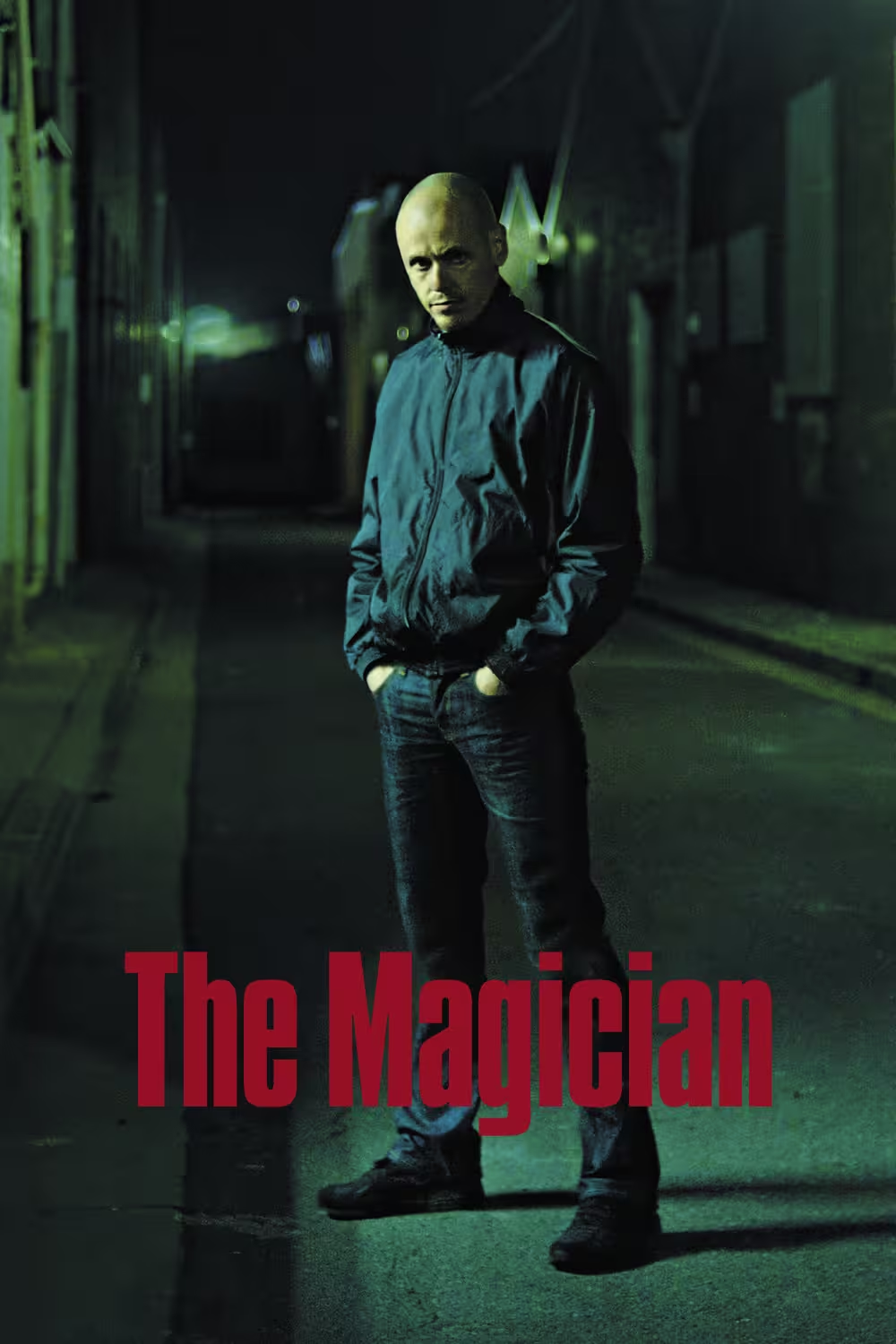
Is The Magician based on a true story: Robert-Houdin legacy explained
The Magician movie is based on the life and memoirs of Jean Eugène Robert-Houdin, the French magician born in 1805 in Blois, France. Jean Eugène Robert-Houdin was the French magician who transformed magic from street entertainment into theatrical art. Robert-Houdin revolutionized how magicians presented themselves by wearing formal evening attire rather than wizard robes. The historical magic performances include the Light and Heavy Chest, Ethereal Suspension, and Second Sight. Robert-Houdin influenced modern magic by establishing conventions that define contemporary stage magic, from formal presentation style to the integration of technology into illusions. Harry Houdini adopted his professional name to honor Robert-Houdin’s legacy, demonstrating the French magician’s lasting impact on performance traditions.
The Magician film released in 2005 dramatizes the life of Jean Eugène Robert-Houdin, the French conjurer who revolutionized stage magic in the 19th century. The biographical drama starring Neil Patrick Harris blends historical events with fictionalized characters to create an engaging narrative about the father of modern magic.
What is The Magician movie based on?

| Aspect | Comparison |
|---|---|
| The Magician movie is based on **the life and memoirs of Jean Eugène Robert-Houdin**, the French mag | incorporating fictional elements to heighten dramatic tension |
The 2005 biographical drama focuses on Robert-Houdin’s journey to opening Theatre Robert-Houdin in 1845, where he performed stage illusions including the Light and Heavy Chest, Ethereal Suspension, and Second Sight. The film compresses events from Robert-Houdin’s over 40 years of professional performing into a more condensed narrative arc.
Who was Jean Eugène Robert-Houdin?
Jean Eugène Robert-Houdin was the French magician who transformed magic from street entertainment into theatrical art. He performed in upscale venues including Théâtre Robert-Houdin, Palais Royal theaters, and Parisian performance halls. Robert-Houdin combined mechanical skill with showmanship to create illusions that baffled aristocratic audiences throughout France and Europe.

Robert-Houdin’s background as a clockmaker enabled him to develop magic innovations including automata, electromagnetic apparatus, and theatrical lighting effects that had never been seen on stage before. His scientific approach to illusion-making distinguished him from traveling conjurers of the Victorian era magic scene.
Harry Houdini later adopted his stage name as tribute to Robert-Houdin, though their relationship became complicated when Houdini later criticized his idol in print. Related: Harry Houdini’s connection to Robert-Houdin explained
Robert-Houdin’s early life and apprenticeship
| Aspect | Comparison |
|---|---|
| Robert-Houdin trained **as a watchmaker in Blois before discovering magic through an accidental book | received a magic text instead, which sparked his lifelong passion for conjuring and mechanical illus |
His dual expertise in precision mechanics and performance art allowed him to create sophisticated automata and clockwork devices that amazed 19th century audiences. Robert-Houdin performed demonstrations at private salons before opening his permanent theater in Paris.
Robert-Houdin’s innovations in stage magic
Robert-Houdin revolutionized how magicians presented themselves by wearing formal evening attire rather than wizard robes. This change elevated the perception of magic from carnival trickery to refined entertainment suitable for aristocratic patrons.
Robert-Houdin invented famous illusions including card tricks, escape acts, and levitation performances that relied on hidden electromagnetic mechanisms and precise timing. Robert-Houdin’s Algeria mission occurred in 1856, when the French government commissioned him to demonstrate Western technology to tribal leaders through theatrical magic.
The magician created over 100 illusions during his career, many of which remain foundational to modern stage performance. His technical manuscripts documented construction methods for mechanical automata and electrical apparatus that other French magicians including Jean-Henri Servais Alkan and Philippe Talon later studied.
How accurate is The Magician film to real events?
The Magician film is moderately accurate in capturing Robert-Houdin’s general career trajectory but condenses decades of gradual success into a dramatically compressed timeline. The movie accurately depicts his transition from watchmaker to theater owner and his development of signature illusions that made him famous throughout France.

Period dramas including The Prestige, The Illusionist, and The Magician prioritize narrative engagement over strict chronological accuracy. Related: The Prestige vs The Illusionist: Comparing historical magic films
The film correctly shows Robert-Houdin’s death in 1871 at age 65, after retiring from regular performances to focus on writing and invention. The biographical drama genre requires creative compression of historical timelines to maintain audience engagement throughout a 90 minute runtime.
What parts of The Magician true story are fictionalized?
The fictionalized parts include the rivalry between Robert-Houdin and Count Edmond de Grisy, which represents the film’s most significant fictional addition. While Robert-Houdin faced professional competition from other performers, the intense personal vendetta depicted in The Magician movie amplifies real historical tensions into melodrama.
The romantic subplot and certain character relationships deviate from documented history to create emotional stakes beyond Robert-Houdin’s professional achievements. Biographical films including Walk the Line, The Theory of Everything, and The Magician regularly modify personal relationships to enhance storytelling.
Gillian Anderson’s character composites multiple people from Robert-Houdin’s life into a single dramatic role. The film restructures events from the 19th century to build toward climactic confrontations that differ from the more gradual reality of Robert-Houdin’s career.
Who was Count Edmond de Grisy in real life?
Count Edmond de Grisy was a wholly fictional character created for The Magician film. No historical evidence suggests Robert-Houdin had a rival matching this character’s description or backstory.
The real magician faced competition from other French conjuring tradition performers, but none with the aristocratic background or obsessive antagonism portrayed in the movie. The Count de Grisy character serves as a dramatic device to externalize Robert-Houdin’s professional struggles.
Magic historians including Jim Steinmeyer, Ricky Jay, and David Price have documented Robert-Houdin’s actual contemporaries without identifying anyone matching the film’s villain. The fictionalized rival allows the biographical drama to create tension through interpersonal conflict rather than the slower reality of building a theater business.
Did Robert-Houdin really have a mentor named Torrini?
Robert-Houdin did not have a real mentor named Torrini. Robert-Houdin claimed in his writings to have studied with an Italian magician named Torrini, but modern scholars consider this fictional mentor entirely invented. Robert-Houdin likely created the Torrini narrative to add romantic mystique to his autobiography.
Contemporary magic historians have found no evidence that Torrini existed as described in Robert-Houdin’s memoirs. The supposed mentor appears to be a literary device Robert-Houdin used to frame his learning journey in his published writings including Memoirs of Robert-Houdin, Confidences of a Conjuror, and technical manuscripts.
The Magician movie perpetuates this myth by featuring Torrini as a central character, blending Robert-Houdin’s own fictionalization with additional dramatic embellishments. The film treats the Torrini story as true despite historical scholarship debunking it.
What historical magic performances appear in The Magician movie?
The historical magic performances include the Light and Heavy Chest, Ethereal Suspension, and Second Sight. The Magician film recreates several authentic Robert-Houdin illusions, including the Light and Heavy Chest that used electromagnetic apparatus to make a wooden box impossibly heavy. This trick demonstrated Robert-Houdin’s ability to incorporate cutting-edge 19th century inventions into his performances.
The Ethereal Suspension illusion appears in the movie, showing Robert-Houdin’s ability to make his son appear to float supported only by a single pole. Related: Famous stage illusions from the 19th century
The Second Sight act featured Robert-Houdin’s wife identifying objects while blindfolded, creating the impression of telepathic communication. These historical venues and performances establish the film’s connection to real magic history despite its fictional narrative elements.
How did Robert-Houdin influence modern magic?
Robert-Houdin influenced modern magic by establishing conventions that define contemporary stage magic, from formal presentation style to the integration of technology into illusions. His emphasis on mechanical ingenuity over mystical pretense shifted how audiences perceived and valued magical entertainment.
Harry Houdini adopted his professional name to honor Robert-Houdin’s legacy, demonstrating the French magician’s lasting impact on performance traditions. Robert-Houdin’s approach to publicity, theater design, and illusion construction became templates that subsequent generations of performers studied.
The transition from carnival entertainment to legitimate theatrical art owes much to Robert-Houdin’s insistence on respectable venues and professional conduct. His influence extends beyond specific tricks to encompass the entire presentation philosophy of modern stage magic.
Why do biographical films change historical accuracy?
Biographical films change historical accuracy because true events often unfold gradually over years without the dramatic peaks and valleys that cinema requires. Biographical films balance educational value against entertainment requirements that demand compressed timelines and heightened conflict.
Related: How biographical films balance fact and fiction
Period films must translate historical contexts for modern audiences while maintaining narrative momentum. The Magician film prioritizes emotional truth over factual accuracy, using fictionalized elements to convey Robert-Houdin’s broader significance rather than documenting every detail.
Screenwriters compress multiple real people into composite characters and restructure chronology to create satisfying story arcs. The biographical drama genre serves to illuminate historical figures’ impact rather than provide documentary precision.
What other magicians influenced The Magician film’s narrative?
The magicians who influenced the film include Victorian era magic tradition performers beyond Robert-Houdin himself. The Magician movie draws atmospheric elements from Victorian era magic traditions beyond Robert-Houdin himself. The film incorporates visual motifs and storytelling conventions from other documented French conjuring tradition performers to create period authenticity.
Contemporary magic historians consulted on the production likely introduced references to other famous magicians whose techniques or presentation styles informed the era’s performance culture. The film synthesizes various historical influences into a narrative centered on Robert-Houdin.
The theatrical world depicted in The Magician reflects the broader Parisian entertainment scene of the 19th century, including influences from theater, circus, and scientific demonstration traditions that shaped Robert-Houdin’s approach.
Where can you learn more about real magic history?
You can learn more about real magic history through archives maintained by magic historians and published scholarship examining figures like Jean Eugène Robert-Houdin. Magic historians maintain archives and publish scholarship examining figures like Jean Eugène Robert-Houdin and the evolution of conjuring arts. Organizations dedicated to preserving magic history offer resources for those interested in separating documented facts from theatrical legends.
Robert-Houdin’s own writings, while containing fictional elements like the Torrini story, provide firsthand accounts of 19th century performance practices. Modern annotated editions of his memoirs include scholarly commentary distinguishing verifiable facts from embellishments.
Academic studies of theatrical history and popular entertainment document how stage magic evolved from street performance to legitimate art form. The real magician behind the romanticized film portrayal emerges through careful examination of historical records, contemporary reviews, and documented innovations that transformed entertainment.
Supplementary
– Jean Eugène Robert-Houdin’s most famous illusions
– The Prestige true story: Were Victorian magicians really rivals?
– Harry Houdini vs Robert-Houdin: The complicated relationship explained
– Historical magic performances that changed entertainment forever
– Best biographical films about magicians and illusionists