Category: The Magicians

  • Are all 5 seasons of magicians on Netflix | Where to watch The Magicians outside Netflix

    Are all 5 seasons of magicians on Netflix | Where to watch The Magicians outside Netflix

    Are all 5 seasons of The Magicians on Netflix?

    The Magicians has 5 complete seasons available on Netflix in select regions, but availability varies by country. The fantasy series originally aired on Syfy from 2015 to 2020, concluding with its fifth and final season.

    Regional availability of The Magicians

    Netflix streaming rights for The Magicians depend on geographic location:

    • United States: All 5 seasons are currently available on Netflix US
    • United Kingdom: The series may have limited availability or be absent from the catalog
    • Canada: Availability varies based on licensing agreements
    • Australia and other regions: Streaming rights often belong to different platforms

    Where to watch The Magicians outside Netflix

    Viewers in regions without Netflix access can find The Magicians on streaming services listed below.

    • Amazon Prime Video offers all seasons for purchase or rental
    • Peacock streams the complete series in the United States
    • DVD and Blu-ray collections provide physical media options
    • Local streaming platforms may hold regional broadcasting rights

    The Magicians series overview

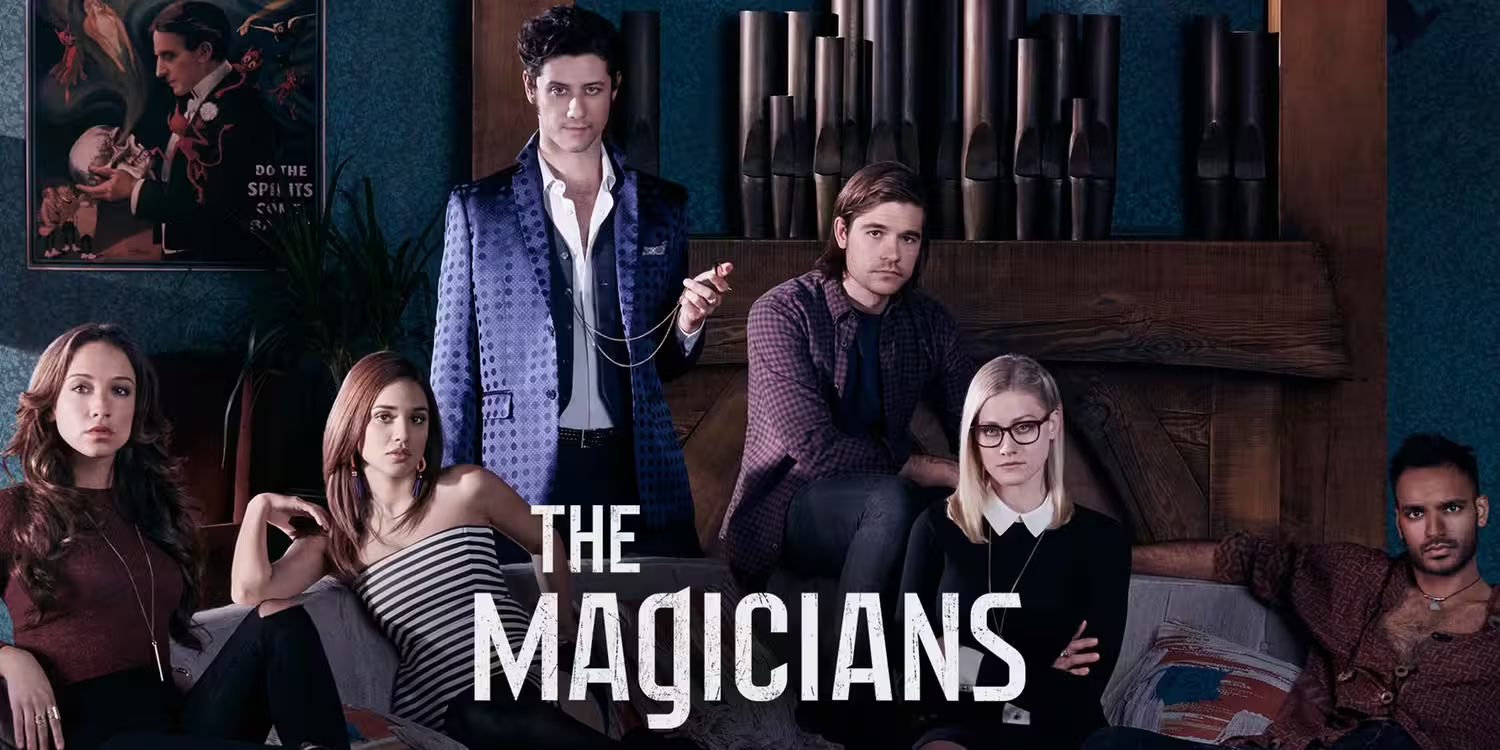
    The Magicians follows Quentin Coldwater, a graduate student who discovers that the magical world from his favorite childhood books is real. The show spans 65 episodes across 5 seasons, blending dark fantasy elements with coming-of-age storytelling. Key cast members include Jason Ralph, Stella Maeve, Olivia Taylor Dudley, Hale Appleman, and Summer Bishil.

    The series concluded on April 1, 2020, with a planned finale that wrapped up major storylines while leaving room for interpretation. Syfy canceled the show after season 5, making it the endpoint for the television adaptation of Lev Grossman’s novel trilogy.

    To confirm current availability in your specific location, check Netflix directly or use third-party tools like JustWatch or Reelgood that track streaming availability across platforms and regions.

  • Did The Magicians get cancelled | Why Syfy cancelled The Magicians

    Did The Magicians get cancelled | Why Syfy cancelled The Magicians

    Did The Magicians get cancelled?

    The Magicians was cancelled after 5 seasons, with the final episode airing on April 1, 2020. Syfy announced the cancellation in March 2020, confirming that the season 5 finale—airing on April 1, 2020—would serve as the series finale.

    Despite strong critical acclaim and a dedicated fanbase, the show was not renewed for a sixth season due to declining ratings and rising production costs. The creative team, including showrunners Sera Gamble and John McNamara, had anticipated the end and crafted the finale to function as a conclusive series ending. Syfy and production company Showcase announced the cancellation in March 2019, before the fifth season premiered, giving the creative team time to craft a proper conclusion to the fantasy series.

    Why Syfy cancelled The Magicians

    The cancellation stemmed from declining viewership and rising production costs. The Magicians experienced a significant drop in live ratings throughout its run, though the series maintained a dedicated fanbase and performed well on streaming platforms. By season 5, the show’s expensive visual effects and ensemble cast became difficult to justify against traditional television metrics that primarily measured live viewing numbers.

    The show’s legacy and impact

    The Magicians ran from 2015 to 2020, adapting Lev Grossman’s trilogy of novels about Brakebills University, a secret institution for learning magic. The series developed a cult following for its mature approach to fantasy storytelling, complex character development, and willingness to tackle dark themes including mental health, addiction, and identity.

    The cancellation disappointed fans who had formed strong connections with characters like Quentin Coldwater, Alice Quinn, Eliot Waugh, and Margo Hanson. Despite the abbreviated notice, showrunners Sera Gamble and John McNamara structured the final season to provide closure, though some storylines remained open-ended.

    Fan response and potential revival

    Following the announcement, fans launched petitions and social media campaigns using #SaveTheMagicians, attempting to convince other networks or streaming services to continue the series. Netflix, Hulu, and other platforms declined to pick up the show, citing the same financial concerns that led to the original cancellation.

    The cast and creators have expressed openness to revisiting The Magicians universe through potential spin-offs, movies, or limited series, though no concrete plans have materialized as of 2026. The complete series remains available on streaming platforms, maintaining steady viewership among fantasy television enthusiasts.

    Did The Magicians get cancelled?

    The Magicians was cancelled after 5 seasons, with the final episode airing on April 1, 2020. Syfy announced the cancellation in March 2020, confirming that the season 5 finale—airing on April 1, 2020—would serve as the series finale. Despite strong critical acclaim and a dedicated fanbase, the show was not renewed for a sixth season due to declining ratings and rising production costs.

    The creative team, including showrunners Sera Gamble and John McNamara, had anticipated the end and crafted the finale to function as a conclusive series ending. Syfy and production company Showcase announced the cancellation in March 2019, before the fifth season premiered, giving the creative team time to craft a proper conclusion to the fantasy series.

    Why Syfy cancelled The Magicians

    The cancellation stemmed from declining viewership and rising production costs. The Magicians experienced a significant drop in live ratings throughout its run, though the series maintained a dedicated fanbase and performed well on streaming platforms. By season 5, the show’s expensive visual effects and ensemble cast became difficult to justify against traditional television metrics that primarily measured live viewing numbers.

    The show’s legacy and impact

    The Magicians ran from 2015 to 2020, adapting Lev Grossman’s trilogy of novels about Brakebills University, a secret institution for learning magic. The series developed a cult following for its mature approach to fantasy storytelling, complex character development, and willingness to tackle dark themes including mental health, addiction, and identity.

    The cancellation disappointed fans who had formed strong connections with characters like Quentin Coldwater, Alice Quinn, Eliot Waugh, and Margo Hanson. Despite the abbreviated notice, showrunners Sera Gamble and John McNamara structured the final season of The Magicians to provide closure, though some storylines remained open-ended.

    Fan response and potential revival

    Following the announcement, fans launched petitions and social media campaigns using #SaveTheMagicians, attempting to convince other networks or streaming services to continue the series. Netflix, Hulu, and other platforms declined to pick up the show, citing the same financial concerns that led to the original cancellation.

    The cast and creators have expressed openness to revisiting The Magicians universe through potential spin-offs, movies, or limited series, though no concrete plans have materialized as of 2026. The complete series remains available on streaming platforms, maintaining steady viewership among fantasy television enthusiasts.

  • Did The Magicians have an ending

    Did The Magicians have an ending

    Did The Magicians show have an ending?

    Yes, The Magicians television series concluded with a definitive ending after 5 seasons on April 1, 2019. The fantasy drama, which aired on Syfy from 2015 to 2019, wrapped up the storylines of Quentin Coldwater, Julia Wicker, Eliot Waugh, Margo Hanson, and the other magical practitioners at Brakebills University.

    The series finale resolution

    The final episode, titled “Fillory and Further,” brought closure to the main narrative arcs. Quentin Coldwater sacrificed himself in the penultimate episode to save magic and his friends, which became the emotional cornerstone of the series conclusion. The finale explored how the surviving characters processed this loss while facing new magical threats and rebuilding their lives.

    The remaining Brakebills graduates dealt with the aftermath of Quentin’s death, the restoration of magic to multiple worlds, and the future of Fillory. Alice Quinn, Penny Adiyodi, Kady Orloff-Diaz, and other central characters received resolution to their individual story arcs, though some plot threads remained open-ended to reflect the ongoing nature of the magical universe.

    Cancellation circumstances

    Syfy and Universal Content Productions canceled The Magicians after season 5 despite moderate ratings and a dedicated fanbase. The decision came as a surprise to showrunners Sera Gamble and John McNamara, who had planned additional seasons based on Lev Grossman’s book trilogy and original storylines. The production team compressed their planned narrative to provide fans with a satisfying conclusion within the shortened timeframe.

    The cancellation reflected broader changes in the television landscape, including Syfy’s strategic shift away from expensive scripted dramas toward lower-cost programming. The network had previously canceled other fantasy series such as Dark Matter and The Expanse before The Magicians met a similar fate.

    Fan reception and legacy

    The series finale generated mixed reactions from the dedicated fanbase. Many viewers of The Magicians appreciated the emotional depth and character development in the final episodes, particularly the exploration of grief, friendship, and personal growth. However, some fans expressed disappointment that certain storylines and relationships, especially the Quentin-Eliot dynamic, did not receive the resolution they had anticipated.

    The show maintained its legacy through its sophisticated handling of mental health themes, LGBTQ+ representation, and deconstruction of traditional fantasy tropes. The Magicians influenced subsequent fantasy television by demonstrating that genre shows could tackle complex adult themes while maintaining magical wonder and humor.

  • Does The Magicians follow the books | What are the structural differences between The Magicians show and the books

    Does The Magicians follow the books | What are the structural differences between The Magicians show and the books

    Does The Magicians show follow the books?

    The Magicians television series adapts the story and characters from Lev Grossman’s trilogy but diverges in plot details, character arcs, and timeline. The show uses the novels as a foundation rather than a blueprint, creating a distinct narrative experience.

    What are the structural differences between The Magicians show and the books?

    The show’s restructuring accelerates the pacing and interweaves multiple storylines that the books present sequentially. The television adaptation compresses and rearranges events from all 3 books—The Magicians, The Magician King, and The Magician’s Land. Book 1 unfolds over 4 years at Brakebills University, while the show’s first season covers this period in months. The series introduces Fillory (the magical world) in season 1, whereas the novels don’t reveal Fillory until the second book.

    Character development variations

    The television version diversifies the cast—Penny becomes Filipino-American, Dean Fogg is blind in the TV version, and Kady Orloff-Diaz is a character not present in the source material. The show expands secondary characters like Eliot Waugh, Margo Hanson (called Janet in the books), and Penny Adiyodi into major protagonists with independent story arcs. Julia Wicker’s hedge witch storyline, which occupies the second novel, runs parallel to Quentin Coldwater’s Brakebills education from season 1.

    Thematic and tonal shifts

    The show explores LGBTQ+ relationships prominently, through Eliot and Quentin’s connection, which the books only hint at briefly. Lev Grossman’s novels present a darker, more introspective examination of depression, privilege, and disillusionment with fantasy tropes. The books focus heavily on Quentin’s internal struggles and existential crises. The Syfy series maintains these mature themes but balances them with ensemble dynamics, faster-paced action sequences, and increased humor.

    Plot divergences in later seasons

    By seasons 3 through 5, The Magicians television series creates largely original storylines while maintaining the spirit of Grossman’s world-building. The quest for the 7 keys, the Library of the Neitherlands as antagonists, and the Monster possessing Quentin’s body are inventions of the show’s writers. The series conclusion differs entirely from the trilogy’s ending—the books conclude with Quentin becoming headmaster of Brakebills, while the show takes a drastically different direction for the character’s fate in season 4.

    Magical system presentation

    Both versions feature intricate hand gestures (called “tutting”) for spellcasting and emphasize rigorous academic training at Brakebills University for Magicians. The novels provide more detailed explanations of magical theory and the physical toll casting takes on practitioners. The television adaptation visualizes these concepts with special effects but simplifies some of the technical complexity to maintain narrative momentum across 13-episode seasons.

  • How can I watch The Magicians online | Streaming availability of The Magicians online | The Magicians online purchase and rental options

    How can I watch The Magicians online | Streaming availability of The Magicians online | The Magicians online purchase and rental options

    How to watch The Magicians online

    The Magicians is currently unavailable to stream on major platforms in the United States. The fantasy drama series, which aired from 2015 to 2020 on Syfy, was last available on The Roku Channel until August 2023.

    Streaming availability of The Magicians online

    The Magicians does not have an active streaming home as of 2026. The series previously appeared on platforms including The Roku Channel, Netflix, and Peacock, but licensing agreements have since expired.

    The Magicians online purchase and rental options

    Digital platforms such as Amazon Prime Video, Apple TV, Google Play, and Vudu offer individual episodes or complete seasons for purchase or rental. These options allow viewers to buy and own digital copies of the series independently of streaming subscriptions.

    Physical media

    DVD and Blu-ray box sets containing all 5 seasons remain available through retailers like Amazon, Best Buy, and other media outlets. Physical media provides permanent access to the series without relying on streaming platform availability.

    Series overview

    The Magicians centers around Brakebills University, a secret institution specializing in magic. Based upon Lev Grossman’s best-selling books, the series follows a group of twenty-something friends who discover that a magical fantasy world they read about as children is real and poses grave danger to humanity. The show ran for 5 seasons on Syfy, concluding in April 2020.

  • Is The Magicians on Netflix scary | How scary is The Magicians on Netflix | What makes The Magicians tv show scary

    Is The Magicians on Netflix scary | How scary is The Magicians on Netflix | What makes The Magicians tv show scary

    The Magicians is moderately scary, with dark-fantasy danger and occasional graphic moments instead of constant horror.

    How scary The Magicians feels

    The Magicians is a dark fantasy-drama with horror spikes, not a pure horror series. The fear level comes in waves: long stretches of plot and relationships, then sudden threat, violence, or trauma.

    What makes The Magicians tv show scary

    The Netflix show uses unpredictable supernatural threats, including a powerful villain called The Beast. It includes frightening scenes, then escalates tension with magic that causes real consequences instead of harmless spectacle.

    What makes it intense, not just scary

    The series includes graphic violence and gore, with injuries such as eyes being removed, hearts being pulled out, amputations, and a skinned animal. It also includes 1 episode with a graphic sexual assault scene that becomes a recurring plot reference.

    Who will find The Magicians too much

    The Magicians fits viewers who handle TV-14 dark fantasy with blood, trauma, and harsh language. Avoid The Magicians if you want “cozy magic school” tone, if you avoid sexual assault content, or if realistic gore ruins fantasy shows.

    Quick self-check before you press play

    Watch 10 minutes of episode 1 to gauge tone, then stop if the dread-heavy atmosphere feels wrong. Use episode guides that flag sexual assault and gore to pick safe episodes, if you want the story without the worst scenes.

  • Where do The Magicians perform in Vegas venue guide | What venues host magic shows on the Las Vegas Strip? | Where does Penn & Teller perform at Rio All-Suite Hotel? | What venues host magic shows on the Las Vegas Strip? || Where does Penn & Teller perform at Rio All-Suite Hotel? | Where is David Copperfield’s show at MGM Grand located? | Where does Mac King perform at Excalibur Hotel? | Where does Criss Angel perform his Mindfreak show?

    Where do The Magicians perform in Vegas venue guide | What venues host magic shows on the Las Vegas Strip? | Where does Penn & Teller perform at Rio All-Suite Hotel? | What venues host magic shows on the Las Vegas Strip? || Where does Penn & Teller perform at Rio All-Suite Hotel? | Where is David Copperfield’s show at MGM Grand located? | Where does Mac King perform at Excalibur Hotel? | Where does Criss Angel perform his Mindfreak show?

    Where do magicians perform in Vegas: Venue guide

    Las Vegas is the global epicenter for magic entertainment, with performance venues concentrated along the 4.2-mile Las Vegas Strip and select off-Strip locations. Major Strip casinos hosting magic shows include MGM Grand, Caesars Palace, Excalibur, Planet Hollywood, and The LINQ. Penn & Teller perform at the Penn & Teller Theater inside Rio All-Suite Hotel, located 0.5 miles west of the center Strip.

    David Copperfield performs at the David Copperfield Theater at MGM Grand, positioned within the casino’s entertainment corridor. Mac King performs at the Excalibur Thunderland Showroom, located on the casino’s second level. Criss Angel performs his Mindfreak show at Planet Hollywood’s MINDFREAK Theater, a custom-built venue opened specifically for his illusion residency. Off-Strip venues feature Las Vegas magic shows in locations including Rio All-Suite Hotel, downtown Fremont Street properties, and suburban casino resorts.

    Between 8-12 active magic shows operate simultaneously across major casino properties, each offering distinct theatrical environments ranging from intimate 200-seat theaters to grand showrooms seating over 1,400 guests. Understanding the specific magician venues Las Vegas provides helps visitors select shows matching their entertainment preferences and budget constraints, with ticket prices typically ranging from $50-$150.

    What venues host magic shows on the Las Vegas Strip?

    Major Strip casinos hosting magic shows include MGM Grand, Caesars Palace, Excalibur, Planet Hollywood, and The LINQ. These properties dedicate specialized theaters to magic residencies, featuring custom-built stages with trapdoors, lighting systems, and sound equipment designed specifically for illusion performances. The Strip’s concentration of magic show locations Vegas creates a competitive entertainment ecosystem where magicians refine their acts to stand out.

    Strip venues offer distinct advantages for Vegas magicians seeking maximum visibility. High foot traffic from casino guests provides built-in audiences, while casino marketing budgets promote shows through digital displays, street-level billboards, and cross-promotional partnerships. Theater configurations vary from traditional proscenium stages to thrust stages extending into audience seating areas.

    Where does Penn & Teller perform at Rio All-Suite Hotel?

    Penn & Teller perform at the Penn & Teller Theater inside Rio All-Suite Hotel, located 0.5 miles west of the center Strip. The theater seats 1,475 guests and features a thrust stage configuration allowing close audience proximity to the performers. This venue operates as a dedicated space for their comedy magic residency, which has run continuously since 2001.

    The Rio’s off-Strip location requires deliberate travel from central Las Vegas properties. Guests access the venue through the casino floor, with signage directing visitors to the theater entrance. The theater’s acoustic design supports Penn’s verbal comedy while allowing subtle sleight-of-hand work to remain visible from all seating sections.

    Where is David Copperfield’s show at MGM Grand located?

    David Copperfield performs at the David Copperfield Theater at MGM Grand, positioned within the casino’s entertainment corridor. The Theater at MGM Grand underwent renovations to accommodate Copperfield’s large-scale illusions, including disappearing acts requiring extensive backstage mechanics. The venue’s Broadway-style layout seats approximately 740 guests across orchestra and mezzanine levels.

    MGM Grand’s central Strip location at 3799 Las Vegas Boulevard South provides easy access for tourists staying at neighboring properties. The theater entrance sits near the hotel’s main casino floor, with box office operations handling same-day and advance ticket purchases. Copperfield’s residency contract secures the venue for multiple performances weekly throughout the year.

    Which theaters at Caesars Palace host magic performances?

    Caesars Palace rotates magic acts across multiple showrooms based on performer schedules and venue availability. The property’s Colosseum typically reserves its 4,300-seat capacity for musical acts and headliners, while smaller venues like the Cleopatra’s Barge occasionally feature close-up magicians during cocktail hours.

    Mat Franco’s venue at The LINQ

    Mat Franco performs at The LINQ Hotel’s Mat Franco Theater, a 300-seat intimate venue designed for comedy magic. The compact space positions all guests within 75 feet of the stage, enabling Franco’s audience interaction techniques and sleight-of-hand demonstrations. The LINQ’s location mid-Strip at 3535 Las Vegas Boulevard South connects to an outdoor shopping promenade.

    The theater’s staging includes minimal set pieces, focusing attention on Franco’s performance rather than elaborate props. Black-box theater elements allow flexible lighting designs adapting to different segments of the 90-minute show. The venue opened specifically for Franco’s residency following his America’s Got Talent victory.

    Shin Lim’s location at The Mirage

    Shin Lim performs at The Mirage’s Terry Fator Theatre, a 1,200-seat showroom hosting rotating magic and variety acts. The venue’s layout supports both intimate close-up magic projected on large screens and grand illusions requiring substantial stage depth. The Mirage property sits at 3400 Las Vegas Boulevard South, near the Strip’s geographic center.

    Shin Lim’s card manipulation acts translate well to the theater’s video projection systems, magnifying hand movements for distant seating sections. The venue previously hosted other magicians and continues booking diverse magic show formats when Lim’s schedule allows touring commitments.

    Where does Mac King perform at Excalibur Hotel?

    Mac King performs at the Excalibur Thunderland Showroom, located on the casino’s second level. The afternoon show runs 70 minutes and utilizes a modest stage setup emphasizing King’s comedy magic rather than elaborate illusions. Excalibur’s family-oriented positioning at 3850 Las Vegas Boulevard South attracts guests seeking accessible entertainment options.

    The Thunderland Showroom seats approximately 300 guests in a general admission format, with earlier arrivals securing closer positions. King’s matinee schedule differentiates his show from evening magic performances, targeting families and budget-conscious visitors. The venue’s smaller footprint reduces production costs while maintaining professional lighting and sound systems.

    What magic show venues exist at Planet Hollywood and Paris?

    Planet Hollywood and Paris Las Vegas feature flexible showroom spaces accommodating rotating magic acts rather than permanent magician residencies. Planet Hollywood’s Saxe Theater previously hosted rotating performers, while Paris Las Vegas occasionally books magic acts in its Le Theatre des Arts. These venues serve as alternative performance spaces when Vegas magicians develop new shows or test material.

    Theater configurations at these properties support various production scales, from solo mentalists to multi-performer illusion spectacles. Booking contracts typically run shorter than major Strip residencies, allowing casinos to refresh entertainment offerings based on seasonal demand patterns. Ticket pricing for rotating shows often falls below permanent residency rates.

    Where does Criss Angel perform his Mindfreak show?

    Criss Angel performs his Mindfreak show at Planet Hollywood’s MINDFREAK Theater, a custom-built venue opened specifically for his illusion residency. The theater incorporates specialized rigging for aerial illusions and hydraulic stage elements supporting Angel’s contemporary magic style. Planet Hollywood’s location at 3667 Las Vegas Boulevard South positions the venue mid-Strip with direct access from casino gaming floors.

    The MINDFREAK Theater seats approximately 1,400 guests across multiple levels, with VIP sections offering enhanced viewing angles for specific illusions. Angel’s production design incorporates rock concert elements including live music, pyrotechnics, and video projection mapping. The venue’s technical infrastructure supports frequent show updates as Angel develops new illusion sequences.

    How do Vegas magicians choose their performance theaters?

    To choose performance theaters, Vegas magicians evaluate venue capacity, stage dimensions, technical capabilities, and casino partnership terms. Magicians performing close-up card magic prefer intimate 200-400 seat venues where audiences perceive subtle hand movements. Illusionists requiring large props and assistants seek showrooms with deep stages, substantial backstage storage, and loading dock access for equipment transportation.

    Casino partnership structures influence venue selection through revenue sharing agreements, marketing support commitments, and creative control provisions. Established performers like David Copperfield negotiate dedicated theaters with custom renovations, while emerging Vegas magicians accept shorter booking windows in multipurpose showrooms. Venues positioned near casino lobbies benefit from spontaneous walk-up ticket purchases.

    Theater acoustics matter particularly for comedy magicians whose verbal humor requires clear sound reproduction. Sight line considerations ensure all seating sections maintain unobstructed views of key illusion moments. Technical specifications including lighting grid capacity, sound system power, and video projection capabilities constrain certain illusion types, forcing magicians to adapt acts to available equipment.

    Which off-Strip venues feature Las Vegas magic shows?

    Off-Strip venues feature Las Vegas magic shows in locations including Rio All-Suite Hotel, downtown Fremont Street properties, and suburban casino resorts. The Rio’s Penn & Teller Theater operates 0.5 miles west of the central Strip, while Fremont Street’s older casino properties occasionally book magic acts in smaller showrooms seating 100-300 guests. Downtown venues target different demographics than Strip properties, emphasizing value pricing and nostalgic entertainment formats.

    Suburban casino properties in Henderson and North Las Vegas periodically book touring magicians for limited engagement runs. These venues lack the foot traffic of Strip locations but offer lower operating costs and flexible booking terms. Magic show locations Vegas extends to include convention center spaces hosting magic competitions and industry events where professional magicians perform demonstration sets.

    Green Valley Ranch, Red Rock Casino, and other Station Casinos properties maintain showrooms booking diverse entertainment including occasional magic acts. These venues serve local residents rather than tourists, requiring different marketing approaches and show scheduling patterns. Ticket prices at off-Strip venues typically run 20-30% below comparable Strip performances.

    What former magic show locations no longer operate?

    Former magic show locations no longer operating include Siegfried & Roy’s theater at The Mirage, Lance Burton’s theater at Monte Carlo, and Steve Wyrick’s venue at Planet Hollywood. The Mirage’s dedicated Siegfried & Roy Theater closed following Roy Horn’s 2003 on-stage incident, with the space later converted for other productions. Lance Burton’s theater at Monte Carlo operated from 1996 to 2010 before the performer retired and the venue transitioned to different entertainment formats.

    Steve Wyrick’s short-lived theater at Planet Hollywood opened in 2007 but closed within months because of insufficient ticket sales. The Luxor previously hosted multiple magic shows in its 1,200-seat theater before shifting to different entertainment categories. Tropicana’s Folies Bergere showroom occasionally featured magic segments before the entire production closed in 2009.

    Venue closures reflect shifting entertainment trends in Las Vegas, where magic competes with electronic dance music events, sports betting lounges, and celebrity chef restaurants for tourist spending. Economic downturns accelerate theater closures, as casinos convert entertainment spaces to more profitable uses. Some former magic venues undergo complete demolition during property renovations, erasing their architectural legacy.

    Theater spaces previously hosting magic shows often transform into different performance formats including concerts, comedy clubs, or theatrical productions. The physical infrastructure supporting magic illusions—trapdoors, flying systems, and hidden storage—remains dormant behind new staging elements. Historical documentation of closed venues exists primarily through archival photos, performer memoirs, and entertainment industry records tracking Las Vegas magic shows evolution.

    Supplementary

    • Complete seating chart guide for every Vegas magic show theater
    • How much do Vegas magician show tickets cost in 2026
    • Best family-friendly magic shows in Las Vegas with kids
    • Vegas magic show schedules: Days and times for every performer
    • Closest parking options for each Las Vegas magic venue
  • Is The Magicians scary enough for horror fans on Syfy | The Magicians horror elements explained with Brakebills University scenes | The Magicians scary scenes that terrified Netflix viewers | Is The Magicians a horror show like other Syfy series | The Magicians dark themes vs typical fantasy TV shows | The Magicians frightening moments featuring The Beast | How scary is The Magicians compared to Lev Grossman novels | The Magicians violent content rating on Netflix and Syfy | Is The Magicians too scary for Quentin Coldwater fans | The Magicians TV show horror rating vs other fantasy series

    Is The Magicians scary enough for horror fans on Syfy | The Magicians horror elements explained with Brakebills University scenes | The Magicians scary scenes that terrified Netflix viewers | Is The Magicians a horror show like other Syfy series | The Magicians dark themes vs typical fantasy TV shows | The Magicians frightening moments featuring The Beast | How scary is The Magicians compared to Lev Grossman novels | The Magicians violent content rating on Netflix and Syfy | Is The Magicians too scary for Quentin Coldwater fans | The Magicians TV show horror rating vs other fantasy series

    Is The Magicians scary enough for horror fans on Syfy

    The Magicians blends horror elements with dark fantasy across 5 seasons, featuring psychological torment, graphic violence, and disturbing themes that set it apart from typical Syfy fantasy series. The show aired on Syfy from 2015 to 2020 with a TV-14 rating, yet its mature content often pushes beyond standard cable boundaries. Fans debate whether The Magicians qualifies as horror or dark fantasy, as creators Sera Gamble and John McNamara crafted a series that embraces terror while maintaining its magical narrative.

    What horror elements does The Magicians include from Syfy’s original run?

    The Magicians incorporates psychological torment, body horror, graphic violence, and supernatural terror throughout its Syfy run. The show introduces Brakebills University students to threats that transcend typical fantasy dangers, using 8-12 graphic violence scenes per season to establish its dark tone. Showrunners Sera Gamble and John McNamara deliberately pushed boundaries with sequences that rival other Syfy original series including The Magicians, Channel Zero, Happy, Deadly Class, and Z Nation.

    Body horror manifests through magical transformations that leave characters physically altered or psychologically damaged. The Beast’s moth-faced appearance serves as the series’ most iconic horror image, combining insect features with human anatomy to create unsettling visual terror. Reynard the Fox attacks introduce sexual violence and divine horror, while possession sequences strip characters of bodily autonomy. These techniques distinguish The Magicians from conventional fantasy programming on streaming platforms including Netflix, Peacock, Amazon Prime Video, and the Syfy app.

    Supernatural terror permeates the narrative through creatures that defy natural law. Hedge witches face torture from magical authorities, establishing institutional horror within Brakebills University’s seemingly safe walls. Martin Chatwin’s transformation into The Beast represents corruption horror, showing how innocence becomes monstrosity. Dean Fogg acknowledges these dangers yet permits students to face them, creating ethical horror around authority figures who sacrifice the young.

    How scary are The Beast scenes at Brakebills University?

    The Beast terrorizes Brakebills University through approximately 8 episodes, establishing him as the series’ primary horror antagonist. Martin Chatwin’s moth-faced form creates immediate visceral revulsion through practical effects that emphasize inhuman features. His attacks on students demonstrate brutal efficiency, combining magic power with psychological manipulation that leaves survivors traumatized. Quentin Coldwater’s first encounter with The Beast in Season 1 sets the tone for the entire series, showing viewers that no character holds plot armor against genuine threats.

    The Beast’s supernatural abilities include finger manipulation magic that allows him to snap digits with casual cruelty, making violence feel intimate and personal. His presence distorts reality around Brakebills, turning the magical university into a hunting ground where protective wards fail. Penny Adiyodi loses his hands to The Beast in a sequence that showcases the show’s willingness to permanently maim main characters. This scene uses practical gore effects including blood spells, severed limbs, magical wounds, and creature attacks to create lasting impact.

    Jump scare moments across the series total fewer than 15, though The Magicians relies more on sustained dread than sudden frights. The Beast appears without warning through mirrors, shadows, and dimensional rifts, using unpredictability to maintain tension. His motivations blend revenge with madness, making him simultaneously sympathetic and terrifying. The reveal of his true identity as Martin Chatwin transforms him from monster to tragic figure, adding psychological complexity to the horror.

    Is The Magicians more violent than other fantasy shows on Netflix?

    The Magicians violent content compares favorably to fantasy TV comparisons including Game of Thrones, Buffy the Vampire Slayer, Supernatural, Grimm, and The Witcher in terms of gore intensity. The TV-14 rating from Syfy proves deceptive, as the series includes mature content warnings including graphic sexuality, drug use, profanity, and self-harm references that push cable boundaries. Direct comparison to other Syfy horror shows places The Magicians in the upper tier of graphic content for non-premium cable programming.

    The Magicians gore and violence rating

    The Magicians gore effects including blood spells, severed limbs, magical wounds, and creature attacks create R-rated visuals within TV-14 constraints. Magic provides narrative justification for extreme violence, allowing characters to inflict damage that practical weapons cannot achieve. Blood magic rituals require self-harm and sacrifice, showing protagonists cutting themselves or others to power spells. Physical torture sequences demonstrate medieval brutality through both magical and mundane methods.

    Magical duels escalate beyond energy blasts to include dismemberment, impalement, and transformation. Alice Quinn’s niffin form vaporizes enemies in Season 1, leaving ash and screams. Julia Wicker’s revenge against Reynard involves visceral magical violence that satisfies audience bloodlust while maintaining story logic. The lampreys, takers, and library monsters introduce creature-based gore, using prosthetics and digital effects to show bodies consumed or corrupted by magical parasites.

    The Magicians psychological horror vs jump scares

    Psychological horror techniques including body horror transformations, identity loss, reality distortion, and existential dread dominate The Magicians scary scenes more than sudden frights. Fewer than 15 jump scare moments across series confirm the show’s preference for sustained unease over cheap shocks. Characters face threats that attack their sense of self rather than just their physical bodies, making the horror more personal and lasting.

    Identity loss manifests through shade removal, where Julia Wicker operates without emotional capacity or moral restraint. The procedure strips away the soul’s protective layer, creating a character who looks identical but behaves monstrously. Alice Quinn’s transformation into a niffin represents ultimate identity horror, as she becomes a being of pure magic who kills her former friends without hesitation. Quentin Coldwater’s depression creates internal horror that proves more dangerous than external threats, as his suicidal ideation nearly destroys him before monsters can.

    Reality distortion occurs through time loops, parallel dimensions, and memory manipulation that leave characters questioning what is real. The mosaic quest in Season 3 forces characters to live entire lifetimes in other bodies, erasing their original identities for decades. When they return, the psychological damage persists, showing horror that transcends physical healing. These techniques create existential dread that lingers after episodes end.

    What dark themes does The Magicians explore beyond Fillory adventures?

    The Magicians dark themes including trauma, addiction, mental illness, sexual assault, suicide, and moral corruption permeate the series beyond its fantasy adventure framework. Sera Gamble and John McNamara adapted Lev Grossman’s novels by intensifying psychological realism, making Brakebills University students face contemporary issues alongside magical threats. Over 90% of episodes engage with dark themes, suggesting nearly constant mature subject matter.

    Julia Wicker’s sexual assault by Reynard the Fox becomes the series’ most controversial and disturbing storyline, depicting divine rape and its aftermath with unflinching honesty. The show devotes multiple episodes to her trauma response, showing realistic PTSD symptoms and destructive coping mechanisms. Her journey toward revenge and healing spans 3 seasons, refusing to resolve sexual violence through simple narrative fixes. This arc divides audiences, with some praising its sensitivity while others find it exploitative.

    Quentin Coldwater’s depression manifests through suicidal ideation, self-medication, and emotional numbness that realistically portrays clinical mental illness. The series shows his psychiatric hospitalization in Season 1, establishing that magical ability doesn’t cure brain chemistry imbalances. His death in Season 4 sparked debate about whether the show glorified suicide or honestly depicted sacrifice. The absence of Quentin in Season 5 forces remaining characters to process grief and guilt, extending the exploration of mental health consequences.

    Addiction appears through Eliot Waugh’s alcoholism and various characters’ dependence on magical solutions to mundane problems. The show treats magic itself as addictive, showing withdrawal symptoms when characters lose access to their power. Hedge witches risk death for magical knowledge, demonstrating how desperation drives self-destructive choices. Margo Hanson’s pragmatic approach to substances contrasts with others’ denial, offering different addiction perspectives.

    Are The Magicians scary scenes appropriate for younger viewers?

    The Magicians scary scenes fail the TV-14 viewer age recommendation threshold for audiences under 16 because the series combines violence, sexuality, and disturbing themes. The TV-14 rating from Syfy proves inadequate for content that regularly depicts sexual situations, graphic injury, substance abuse, and psychological trauma. Multiple viewer content warnings appear throughout the series, covering topics that many parents consider inappropriate for teenage viewers despite the technical rating.

    Frightening creatures including The Beast, Reynard the Fox, lampreys, takers, and library monsters create visual horror that affects younger viewers differently than adults. The Beast’s moth face generates genuine nightmares rather than campy fear, using practical effects that feel tangible. Reynard’s attacks contain sexual violence that requires mature context understanding. The lampreys attach to victims’ spines in body horror sequences that combine parasitism with loss of autonomy.

    IMDb parental guide severity ratings place The Magicians in the “severe” category for violence, sex, and frightening scenes. The guide specifically warns about Julia’s assault arc, Quentin’s suicide attempt, and multiple torture sequences that lack restraint. Parents should preview episodes before allowing teenagers to watch, as individual maturity levels vary significantly. The show’s merits for older teens include honest discussions of mental health, consent, and trauma recovery that provide valuable perspectives when viewed with appropriate context.

    How does The Magicians compare to Lev Grossman’s darker novel content?

    Lev Grossman novels establish baseline darkness that the TV adaptation intensifies through visual medium advantages and extended character development. The books present Quentin Coldwater as more unlikeable and self-absorbed, while the show softens him into a more sympathetic protagonist. Julia Wicker’s assault occurs off-page in the novels but receives extended screen time in the series, making the trauma more explicit and harder to watch.

    The show adds horror elements not present in Grossman’s work, including The Beast’s moth face design and multiple body horror transformations. The novels focus more on ennui and disappointment than active terror, presenting magic as ultimately unsatisfying rather than dangerous. Sera Gamble and John McNamara transformed this existential melancholy into visceral threat, adding monsters and violence that serve television pacing requirements.

    Brakebills University receives expanded development in the series, becoming a full setting rather than brief training ground. The show introduces Dean Fogg as a major character with his own trauma and secrets, while the books keep him peripheral. Fillory remains recognizably similar between versions, though the show adds political intrigue and darker consequences to ruling the magical land. The series extends beyond the trilogy’s conclusion, creating 2 additional seasons of original content that escalate stakes beyond Grossman’s vision.

    What frightening moments involve Quentin Coldwater and Alice Quinn?

    Quentin Coldwater faces frightening moments including his psychiatric hospitalization, The Beast’s attack, Alice’s niffin transformation, and his own death across 5 seasons. His Season 1 hospitalization establishes mental illness as recurring threat, showing psychiatric wards and medication side effects with uncomfortable realism. The Beast’s finger manipulation during their first encounter leaves Quentin physically broken and psychologically shattered, demonstrating his vulnerability despite protagonist status.

    Alice Quinn’s transformation into a niffin in Season 1 creates relationship horror as Quentin loses his girlfriend to magical corruption. She becomes a being of pure destructive magic who recognizes him but feels no love, offering cold rationality where affection once existed. Quentin’s attempts to restore her humanity span multiple seasons, showing obsessive grief that borders on unhealthy. When Alice returns to human form in Season 2, their relationship remains damaged by trauma neither can fully overcome.

    Their romantic dysfunction generates psychological horror through miscommunication, betrayal, and incompatible trauma responses. Alice’s resurrection leaves her emotionally numb and resentful toward Quentin for forcing humanity back upon her. She briefly becomes a library agent, using institutional power to suppress magical knowledge and control former friends. Quentin’s inability to let her go creates codependent patterns that hurt both characters, demonstrating relationship horror alongside supernatural threats.

    Quentin’s death in Season 4 occurs through self-sacrifice rather than villain action, making it more disturbing than typical hero deaths. He chooses to power a spell that saves his friends at the cost of his own life, walking calmly toward oblivion. The scene plays as suicide by heroism, raising ethical questions about whether sacrifice redeems his earlier suicidal ideation or represents its culmination. Alice’s grief throughout Season 5 shows lasting consequences of losing him, refusing easy closure.

    Why The Magicians feels darker than typical Syfy fantasy series

    The Magicians feels darker through its combination of graphic content, psychological realism, and refusal to provide easy resolutions to trauma. Syfy original series typically maintain tonal lightness even when depicting violence, using humor or heroic triumph to offset darkness. The Magicians denies this comfort, letting characters remain broken by experiences and showing that magic cannot fix fundamental human problems.

    Disturbing storylines including Julia’s assault arc, Quentin’s depression, Alice’s niffin transformation, and shade removal receive extended treatment rather than quick resolution. The show devotes entire seasons to trauma recovery, depicting setbacks and permanent damage alongside gradual healing. Characters who experience violation never fully return to their previous selves, modeling realistic trauma responses that genre television typically avoids.

    Moral corruption appears throughout as protagonists make increasingly questionable choices to achieve goals. Margo Hanson rules Fillory through pragmatic brutality, executing prisoners and manipulating allies. Penny Adiyodi becomes a library agent who suppresses magical knowledge, betraying his earlier idealism. Dean Fogg manipulates students into dangerous situations, justifying sacrifices through greater good logic. The show refuses to clearly condemn these choices, presenting them as understandable responses to impossible situations.

    The absence of clear heroes and villains creates moral ambiguity that prevents comfortable viewing. Martin Chatwin becomes The Beast through childhood trauma, making him simultaneously monster and victim. Reynard the Fox acts according to divine nature rather than human morality, removing satisfying punishment options. Even protagonists commit acts that would mark them as antagonists in traditional fantasy, blurring lines between good and evil.

    Is The Magicians horror content consistent across 5 seasons on Netflix?

    The Magicians horror content varies across 5 seasons, with Season 1 establishing the darkest baseline and later seasons oscillating between horror intensity and lighter adventure. Approximately 35-40 episodes featuring sustained horror elements cluster heavily in early seasons before the show finds tonal balance. Netflix streaming allows binge viewing that makes tonal shifts more apparent than weekly Syfy broadcasts did.

    Season 1 introduces frightening creatures and disturbing storylines with maximum intensity, using The Beast and Julia’s assault to establish dark credentials. The season maintains consistent dread through body horror transformations and psychological threats. Season 2 continues this darkness while expanding scope, adding parallel timelines and niffin Alice to the threat roster. These early seasons form the series’ horror peak.

    Season 3 shifts toward adventure with the mosaic quest, though it maintains psychological horror through identity loss and time manipulation. The quest forces characters into other bodies for decades, creating existential horror beneath the adventure framework. Season 4 returns to darker territory with the Monster storyline and Quentin’s death, shocking audiences with permanent consequences. Season 5 struggles with tonal consistency after losing its protagonist, alternating between grief-heavy episodes and lighter magical adventures.

    Horror content on Netflix versus Syfy broadcasts remains identical in terms of graphic content, as streaming merely changes access method rather than editing. The TV-14 rating applies across platforms, though Netflix’s content warnings provide more detailed information than Syfy’s broadcast warnings did. Binge viewing intensifies horror impact by removing commercial breaks and weekly digestion periods, making disturbing content feel more overwhelming when consumed rapidly.

    How scary is The Magicians for fans of Eliot Waugh’s character arc?

    Eliot Waugh’s character arc includes 3 particularly frightening storylines: his possession by the Monster, his time loop marriage to Quentin, and his assassination in Fillory. The possession arc in Season 4 strips Eliot of bodily autonomy for approximately 10 episodes, trapping him inside his own mind while a ancient entity uses his body. The Monster commits murders and destroys relationships using Eliot’s face, creating horror through identity theft and forced complicity.

    The time loop mosaic quest forces Eliot and Quentin into a lifetime marriage across multiple iterations, creating psychological horror through repeated relationship failure and success. They live entire lives together, raise a son, grow old, and die before resetting to try again. The emotional toll of remembering these false lifetimes while returning to their original bodies generates existential horror. Eliot carries decades of memories from a relationship that Quentin initially forgets, creating asymmetric trauma and unrequited love.

    Eliot’s assassination while ruling Fillory demonstrates political horror through betrayal and vulnerability despite power. His time as High King exposes him to court intrigue, assassination attempts, and moral compromises that corrupt his idealism. The show depicts Fillory’s politics as brutal beneath the fantasy veneer, with Eliot forced to execute prisoners and wage war. His survival requires becoming harder and more ruthless, showing personality horror as circumstances strip away his trademark humor and kindness.

    The resolution of Eliot’s possession requires his friends to psychically enter his mind, creating psychological horror through representations of his internal suffering. They navigate his memories and fears made manifest, seeing his trauma visualized through symbolic nightmare imagery. The rescue damages all participants, demonstrating that saving someone from horror doesn’t leave rescuers unscathed. Eliot’s recovery extends through Season 5, showing realistic PTSD symptoms rather than instant healing.


    Supplementary

    • The Magicians season 4 darkest moments ranked by horror intensity
    • Is Julia Wicker’s storyline too disturbing for sensitive viewers
    • The Beast vs other Syfy villains: Scariest TV antagonists ranked
    • The Magicians content warnings: Complete parent guide by episode
    • Dark fantasy TV shows streaming on Netflix in 2026
    • Lev Grossman interview: Making The Magicians novels darker for TV
    • How The Magicians handles mental health and trauma responsibly
  • Is The Magicians appropriate for kids | What’s the recommended viewing age for The Magicians?

    Is The Magicians appropriate for kids | What’s the recommended viewing age for The Magicians?

    Is The Magicians appropriate for kids?

    The Magicians is not appropriate for children due to mature content including sexual violence, graphic themes, and adult situations. The Syfy fantasy series carries a TV-14 rating but contains content that exceeds typical family-friendly programming.

    Content warnings parents should consider

    The Magicians features several elements that make the show unsuitable for younger audiences. The series depicts graphic sexual assault, with a major storyline involving the brutal rape of character Julia Wicker by the trickster god Reynard. The show received criticism from critics and fans for featuring 2 sexual assault survivors as antagonists and romanticizing suicidal ideation in later seasons.

    The television program includes heavy drinking, drug use, and adult language throughout its 5-season run. Characters engage in frequent sexual situations and nudity, with main character Eliot Waugh characterized as a heavy drinker. The series also contains violence, horror elements, and dark fantasy themes involving dangerous magical worlds and monsters.

    What’s the recommended viewing age for The Magicians?

    The Magicians targets adult and mature teen audiences aged 16 and older. Parents should preview the content before allowing teenagers to watch, as sensitive topics like sexual violence, substance abuse, and suicide are central to multiple storylines. The fantasy premise based on Lev Grossman’s novels may appeal to young readers, but the television adaptation treats material with significantly darker and more explicit content than typical young adult fantasy programming.

  • Is The Magicians based on Harry Potter | Differences between The Magicians and Harry Potter

    Is The Magicians based on Harry Potter | Differences between The Magicians and Harry Potter

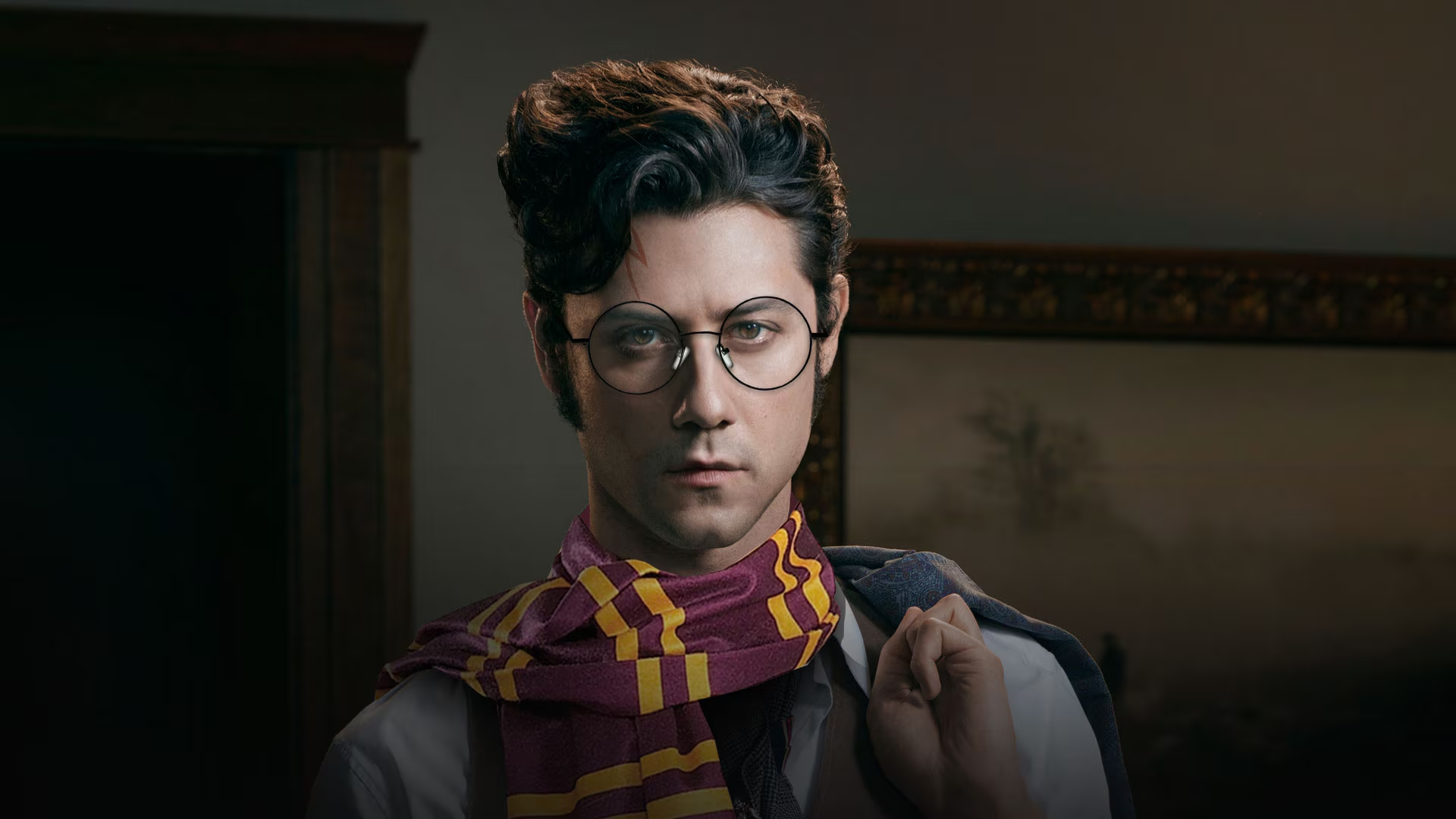
    Is The Magicians based on Harry Potter?

    The Magicians is not based on Harry Potter, though both share fantasy and magic themes. The Magicians stems from Lev Grossman’s novel trilogy published between 2009 and 2014, which reimagines young adult fantasy tropes through a darker, more adult lens.

    Origins of The Magicians series

    Lev Grossman created The Magicians as a deliberate deconstruction of classic fantasy narratives, including both Harry Potter and The Chronicles of Narnia. The novelist combined elements from multiple fantasy traditions—the magical boarding school from Harry Potter, the portal fantasy world from Narnia, and adult themes from contemporary literature. Grossman’s trilogy explores what happens when fantasy tropes encounter realistic psychological struggles, addiction, and existential questions.

    The series follows Quentin Coldwater, who discovers magic is real and enrolls at Brakebills University for Magical Pedagogy. Unlike Hogwarts students who face clear good-versus-evil conflicts, Brakebills students grapple with depression, substance abuse, toxic relationships, and the disappointment of achieving childhood dreams.

    Differences between The Magicians and Harry Potter

    The Magicians diverges from Harry Potter in 5 fundamental ways:

    • Target audience: The Magicians aims at adults with explicit content, profanity, and mature themes, while Harry Potter targets young adults with age-appropriate challenges
    • Tone and worldview: The Magicians presents a cynical, often nihilistic perspective where magic doesn’t solve life’s problems, whereas Harry Potter maintains hope and emphasizes friendship’s power
    • Character development: Quentin Coldwater is an antihero with persistent character flaws, contrasting with Harry Potter’s traditional hero’s journey
    • Magic system: Brakebills teaches rigorous, academic magic requiring years of study and precise hand movements, unlike Hogwarts’ more intuitive wand-based system
    • Narrative structure: The Magicians spans characters’ lives from college through their 30s, while Harry Potter follows a seven-year arc from childhood to young adulthood

    Influences acknowledged by Lev Grossman

    The author cites C.S. Lewis’s Narnia series as the primary inspiration for Fillory, the magical world within The Magicians that mirrors Narnia’s role as an escapist fantasy realm. Lev Grossman has openly discussed multiple fantasy influences beyond Harry Potter. Grossman also drew from T.H. White’s The Once and Future King, Ursula K. Le Guin’s Earthsea series, and various Arthurian legends.

    The novelist wrote The Magicians as a response to the young adult fantasy genre rather than a derivative work. Grossman wanted to explore what happens when characters discover that magical worlds don’t provide meaning or happiness automatically—a question seldom addressed in traditional fantasy literature including Harry Potter.

  • Is The Magicians coming back to Netflix in %%currentyear%% | Where to watch The Magicians after Netflix removal | The Magicians streaming options on Peacock and other platforms | Why The Magicians was cancelled by Syfy after season 5 | The Magicians Netflix return: What fans need to know | Is The Magicians revival possible after Syfy cancellation | The Magicians streaming guide: Netflix, Peacock, and alternatives | Will Netflix bring back The Magicians based on Lev Grossman novels | The Magicians cancelled: Where the cast went after the finale | The Magicians return to streaming: Current availability in 2026

    Is The Magicians coming back to Netflix in %%currentyear%% | Where to watch The Magicians after Netflix removal | The Magicians streaming options on Peacock and other platforms | Why The Magicians was cancelled by Syfy after season 5 | The Magicians Netflix return: What fans need to know | Is The Magicians revival possible after Syfy cancellation | The Magicians streaming guide: Netflix, Peacock, and alternatives | Will Netflix bring back The Magicians based on Lev Grossman novels | The Magicians cancelled: Where the cast went after the finale | The Magicians return to streaming: Current availability in 2026

    Is The Magicians coming back to Netflix in 2026

    The Magicians is not available on Netflix in 2026. The Magicians streams on 3 platforms after leaving Netflix. Peacock streaming service hosts The Magicians complete collection of 65 episodes.

    Syfy canceled The Magicians in 2020 because rising production costs and shifting network priorities made renewal unfeasible. The Magicians return to Netflix is unlikely because NBCUniversal controls streaming rights exclusively through Peacock. To watch The Magicians complete series in 2026, subscribe to Peacock for instant access to all 65 episodes across 5 seasons.

    The Magicians Netflix removal left fans searching for streaming options after Syfy canceled this fantasy series. The show aired for 5 seasons on Syfy between 2015 and 2020, producing 65 episodes based on Lev Grossman’s novels. Streaming rights shifted from Netflix to NBCUniversal’s Peacock platform, where The Magicians currently lives.

    Is The Magicians currently available on Netflix?

    The Magicians is not available on Netflix in 2026. Netflix removed The Magicians when streaming rights reverted to NBCUniversal. The series follows Quentin Coldwater and other students at Brakebills University as they discover magic is real and face threats from the magical land of Fillory. Main characters including Quentin Coldwater, Julia Wicker, Eliot Waugh, Margo Hanson, and Alice Quinn captivated audiences through complex storylines involving spellcasting, pocket dimensions, time travel, and parallel worlds.

    The show holds an 7.6 rating on IMDb and a 91% Rotten Tomatoes score. Fans continue searching for The Magicians streaming options after the Netflix removal. Licensing agreements between production companies including Universal Content Productions, Groundswell Productions, and Universal Television determine where the series appears.

    Where can you stream The Magicians after Netflix removal?

    The Magicians streams on 3 platforms after leaving Netflix. Peacock became the home for all 5 seasons. Other streaming services including Peacock, Netflix, Paramount Plus, Max, and Apple TV Plus occasionally offer the series through rotating catalogs.

    The show is currently available on streaming platforms.

    The Magicians on Peacock streaming service

    Peacock streaming service hosts The Magicians complete collection of 65 episodes. Peacock subscription costs $7.99 per month for the premium tier. NBCUniversal owns both Peacock and the production rights to The Magicians, making this partnership permanent. Subscribers access all 5 seasons without rotation or removal risks that plague other streaming platforms including Peacock, Netflix, Hulu, and Amazon Prime Video.

    The series premiered in 2015 on Syfy before moving to streaming-exclusive distribution. Showrunners including Sera Gamble, John McNamara, and Henry Alonso Myers developed the show with intricate plotlines that rewarded dedicated viewers. Peacock’s interface organizes episodes by season, making binge-watching simple for new fans discovering the series.

    The Magicians availability on other streaming platforms

    Streaming platforms including Peacock, Netflix, Hulu, and Amazon Prime Video occasionally license The Magicians for limited runs. Hulu carried select seasons during 2023 and 2024 through temporary licensing deals. Amazon Prime Video offers individual episode purchases for viewers without Peacock subscriptions. Check current availability before committing to a subscription, as streaming rights expire and renew unpredictably across different services.

    Why was The Magicians cancelled by Syfy in 2020?

    Syfy canceled The Magicians in 2020 because rising production costs and shifting network priorities made renewal unfeasible. The cancellation shocked fans who expected season 6. Production companies including Universal Content Productions, Groundswell Productions, and Universal Television struggled to foot the budget for magical elements including spellcasting, pocket dimensions, time travel, and parallel worlds that required expensive visual effects.

    Aspect Comparison
    Network executives at NBCUniversal redirected resources toward new original programming. The series failed to achieve the blockbuster status Syfy needed to for renewal

    What happened to The Magicians cast after cancellation?

    Aspect Comparison
    Cast members **transitioned to 6 new projects across film, television, and theater** after The Magic other actors pursued independent films

    Jason Ralph and Stella Maeve post-Magicians projects

    Jason Ralph, who portrayed Quentin Coldwater, shifted toward theater and limited television appearances. Ralph married co-star Rachel Brosnahan (though she never appeared on The Magicians) and focused on stage productions in New York. Stella Maeve, who played Julia Wicker, took roles in 3 independent films and appeared in guest spots on streaming series.

    Both actors maintain connections to the fantasy genre through conventions and reunion events. Their post-Magicians work demonstrates range beyond the magical school format that defined their early careers.

    Hale Appleman, Arjun Gupta, and Summer Bishil current work

    Hale Appleman developed his theater career after playing Eliot Waugh for 5 seasons. Arjun Gupta joined medical drama series and refined dramatic acting skills beyond fantasy roles. Summer Bishil appeared in 4 different streaming productions after her role as Margo Hanson ended.

    These 3 actors leveraged The Magicians visibility to secure diverse roles. Bishil earned particular praise for dramatic performances that showcased range beyond the sharp-tongued queen persona fans loved.

    Will The Magicians return to Netflix streaming library?

    The Magicians return to Netflix is unlikely because NBCUniversal controls streaming rights exclusively through Peacock. Netflix would need to negotiate expensive licensing fees to reacquire the series. Peacock’s ownership of both the streaming platform and production companies including Universal Content Productions, Groundswell Productions, and Universal Television creates a vertical integration that eliminates incentives to share content.

    Will The Magicians Return To Netflix Streaming Library?

    Historical patterns show NBCUniversal pulling content from Netflix to strengthen Peacock’s catalog. The Magicians serves as flagship fantasy content alongside other genre offerings. Fans hoping for The Magicians Netflix restoration should redirect subscriptions toward Peacock instead.

    Is a The Magicians revival or movie possible?

    A The Magicians revival faces 3 obstacles despite fan campaigns and social media movements. First, cast members including Jason Ralph, Stella Maeve, Hale Appleman, Arjun Gupta, and Summer Bishil signed contracts for other projects. Second, showrunners including Sera Gamble, John McNamara, and Henry Alonso Myers moved to different productions. Third, Syfy and NBCUniversal showed no interest in rebooting the series as of 2026.

    Is A The Magicians Revival Or Movie Possible?

    Lev Grossman wrote 3 novels in The Magicians trilogy, providing source materials including Lev Grossman novels, comic book adaptations, and fan fiction for potential new storylines. A movie adaptation could explore unadapted content from the books. No studio has announced development plans for either a sixth season or feature film continuation.

    The cancellation finality means fans should treat season 5 as the definitive conclusion. Reunion specials or limited series remain more plausible than full revival, but even these seem distant possibilities given cast and crew availability.

    How does The Magicians TV series differ from Lev Grossman novels?

    The Magicians TV series diverged from Lev Grossman’s original 3 novels. Showrunners including Sera Gamble, John McNamara, and Henry Alonso Myers expanded character backstories and added original plotlines not present in The Magicians novel trilogy. Julia Wicker’s storyline received substantial development beyond the books. Magical schools including Brakebills University, Hogwarts, Scholomance, and Unseen University serve similar narrative functions, but The Magicians TV version emphasized darker, adult themes.

    How Does The Magicians Tv Series Differ From Lev Grossman Novels?

    Lev Grossman’s novels focused heavily on Quentin’s depression and disillusionment. The series balanced these elements with ensemble storytelling that gave equal weight to cast members including Jason Ralph, Stella Maeve, Hale Appleman, Arjun Gupta, and Summer Bishil. Book readers often debate whether TV adaptations improved upon or diminished the source material.

    Character deaths, relationships, and magical mechanics changed between page and screen. The TV version introduced Fillory politics earlier and expanded the roles of secondary characters beyond Grossman’s original vision.

    What are the best alternatives to The Magicians on Netflix?

    Fantasy series including The Magicians, Shadow and Bone, The Witcher, and Carnival Row offer similar adult-oriented magical storytelling. Shadow and Bone adapts Leigh Bardugo’s Grishaverse novels with comparable magical school elements. The Witcher provides dark fantasy with complex magic systems and morally ambiguous characters. Carnival Row blends Victorian aesthetics with fairy tale creatures in an urban setting.

    What Are The Best Alternatives To The Magicians On Netflix?

    Netflix maintains 4 strong fantasy series that appeal to former Magicians fans. Each show features magical elements including spellcasting, pocket dimensions, time travel, and parallel worlds adapted for mature audiences. These alternatives lack The Magicians’ specific blend of sardonic humor and metafictional commentary on fantasy tropes, but they fill the gap left by the series’ departure from Netflix.

    Streaming services including Peacock, Netflix, Paramount Plus, Max, and Apple TV Plus all invest heavily in fantasy content. Viewers should explore multiple platforms to find shows matching their preferences for magical storytelling.

    How to watch The Magicians complete series in 2026?

    To watch The Magicians complete series in 2026, subscribe to Peacock for instant access to all 65 episodes across 5 seasons. Peacock subscription costs $7.99 per month for the premium tier without commercials. The show is currently available on four streaming platforms total, but Peacock remains the most reliable option.

    How To Watch The Magicians Complete Series In 2026?

    Alternative viewing methods include purchasing individual seasons through Amazon Prime Video or waiting for temporary licensing deals on streaming platforms including Peacock, Netflix, Hulu, and Amazon Prime Video. Digital purchases cost more upfront but provide permanent access regardless of streaming rights transfers.

    Physical media collectors can buy Blu-ray and DVD box sets containing all seasons with bonus features. These sets include behind-the-scenes content, cast interviews, and deleted scenes not available on streaming services. The series box set serves as the definitive way to own The Magicians independent of platform availability changes.

    Supplementary

    – The Magicians season 6: Why fans are still campaigning for renewal

    – E fantasy streaming series to watch after The Magicians

    – The Magicians cast: Where are they now in 2026

    – Lev Grossman novels vs The Magicians TV adaptation: Key differences

    – Best episodes of The Magicians ranked by fans and critics

    – The Magicians ending explained: What happened in the series finale

    – Peacock vs Netflix: Which streaming service has better fantasy content

  • What magician had a TV show | Famous magicians who had TV shows and changed entertainment

    What magician had a TV show | Famous magicians who had TV shows and changed entertainment

    Famous magicians who had TV shows and changed entertainment

    David Blaine redefined magic television by abandoning elaborate stage productions for raw street performances. Criss Angel: Mindfreak became a cultural sensation on A&E network by combining gothic aesthetics with impossible illusions. David Copperfield dominated CBS network with 27 television specials that made Copperfield the world’s most commercially successful magician.

    Penn & Teller brought intellectual skepticism to magic television, creating shows that celebrate deception while occasionally explaining methodology. Television magicians transformed magic from niche entertainment into mainstream cultural force by demonstrating its viability as television content.

    Television transformed magic from intimate parlor entertainment into mass cultural phenomena. Several magicians leveraged the medium to become household names, changing how audiences experience illusions and inspiring generations of performers.

    David Blaine’s street magic TV specials revolutionized the genre

    David Blaine redefined magic television by abandoning elaborate stage productions for raw street performances. The approach emphasized genuine audience reactions over theatrical presentation, creating intimate viewing experiences that made magic feel immediate and real. Blaine combined close-up illusions with dangerous endurance stunts including Buried Alive, Frozen in Time, and Above the Below to establish his unique brand.

    The TV magician pioneered a documentary-style format where handheld cameras captured spontaneous shock and disbelief from bystanders. This authentic approach contrasted sharply with traditional magic television shows that relied on studio audiences and scripted patter. Blaine’s influence extends beyond magic into pop culture, making him one of the most recognizable famous TV magicians worldwide.

    David Blaine: Street Magic on ABC changed everything in 1997

    David Blaine: Street Magic premiered on ABC network in 1997, introducing audiences to a new magic television show format. The special featured street magic illusions including levitation, card tricks, and close-up magic performed for celebrities and ordinary people on New York City streets. Unlike previous magician television series, Blaine barely spoke, letting stunned reactions tell the story.

    The special attracted massive ratings and spawned countless imitators trying to replicate Blaine’s stripped-down aesthetic. The silent, intense performance style became instantly recognizable and separated Blaine from chatty stage performers. Street Magic demonstrated that television could capture magic’s intimate wonder without elaborate sets or costume changes.

    David Blaine’s later NBC specials including Beyond Magic

    Blaine transitioned to NBC network for subsequent specials that escalated his endurance challenges. David Blaine: Beyond Magic aired in 2016, featuring death-defying stunts performed for celebrities including David Beckham and Stephen Hawking. The special blended traditional magic with extreme physical feats like catching bullets in his mouth.

    The NBC collaborations maintained the documentary approach while incorporating higher production values. Blaine’s evolution from street performer to endurance artist expanded what audiences expected from magic show TV programming. Each special pushed boundaries further, cementing his reputation as television’s most daring magician.

    What made Criss Angel’s Mindfreak a phenomenon on A&E?

    Criss Angel: Mindfreak became a cultural sensation on A&E network by combining gothic aesthetics with seemingly impossible illusions. The magician television series ran for 5 seasons and established Angel as the most visible magician of the 2000s. Angel performed large-scale illusions in public spaces without traditional theatrical framing, creating viral moments before viral marketing existed.

    The show’s success stemmed from Angel’s rock-star persona and willingness to perform dangerous stunts including body suspensions and escapes. Mindfreak series episodes featured stage illusions including sawing people in half, vanishing acts, and escapes performed in unconventional locations like casinos and parking lots. Angel’s theatrical presentation and intense commitment to his dark magician character resonated with younger audiences who might never attend traditional magic shows.

    Mindfreak popularized guerrilla-style street performances where Angel would seemingly walk on water or float between buildings in broad daylight. The show’s editing emphasized spectacle and shock value over explaining methodology, maintaining mystery while delivering entertainment. Angel’s television presence inspired debates about whether his illusions involved camera tricks or genuine magical skill, generating massive publicity.

    David Copperfield’s CBS television specials throughout the 1980s and 1990s

    David Copperfield dominated CBS network with 27 television specials that made him the world’s most commercially successful magician. The elaborate productions featured storytelling elements wrapped around grand illusions like making the Statue of Liberty disappear. Copperfield’s specials combined romance, music, and magic into polished entertainment packages that appealed to broad family audiences.

    The famous TV magician developed signature illusions specifically for television, understanding how camera angles could enhance impossibility. The CBS collaborations showcased famous Vegas magicians’ production values while maintaining intimate moments of close-up magic. Copperfield’s success on television directly fueled his Las Vegas residency and touring empire.

    Each special followed a narrative structure where Copperfield played romantic hero or daring adventurer, improving magic beyond mere trick demonstration. The sophisticated approach influenced how subsequent magicians structured their television appearances. Copperfield proved that magic television could command prime-time slots and compete with mainstream entertainment programming.

    Penn & Teller’s multiple TV shows including Fool Us on The CW

    Penn & Teller brought intellectual skepticism to magic television, creating shows that celebrate deception while occasionally explaining methodology. The long-running Penn & Teller: Fool Us premiered in 2011 on The CW network and has produced 11 seasons with 147 episodes.

    The competition format invites magicians to perform tricks that Penn & Teller can’t figure out, celebrating magical craftsmanship.

    The duo’s various TV magic formats including specials, series, competition shows, and documentaries showcase their versatility. Penn & Teller differ from traditional magicians by incorporating comedy, social commentary, and occasionally revealing secrets to make philosophical points about deception. The television work emphasizes magic as intellectual art form than supernatural mystery.

    Fool Us show demonstrates respect for magical craft while entertaining audiences who appreciate both successful deceptions and expert analysis. The show launched careers for modern magicians including Shin Lim, Mat Franco, and AGT winners who used Fool Us appearances as springboards. Penn & Teller’s television presence spans decades, making them among the most enduring famous TV magicians in history.

    Dynamo’s British television series Magician Impossible on BBC

    Dynamo (Steven Frayne) became Britain’s most famous magician through Dynamo: Magician Impossible, which aired from 2011-2014, series on BBC network. The show combined street magic with spectacular stunts performed at iconic British locations. Dynamo’s approachable personality and working-class background made him relatable to audiences who found traditional magicians pretentious.

    Magician Impossible featured audience reactions including shock, disbelief, and amazement from celebrities and ordinary people encountering impossible events. Dynamo walked on the River Thames, levitated beside London buses, and performed card tricks for global celebrities. The television series demonstrated that British magic television could compete with American productions.

    The magician’s health struggles with Crohn’s disease added human dimension to his television persona, making him more than a mysterious performer. Dynamo’s success opened doors for British magicians in international markets. The documentary-style approach followed the template established by Blaine while incorporating distinctly British sensibilities and locations.

    The Masked Magician’s Breaking the Magician’s Code on Fox

    The Masked Magician (Val Valentino) became controversial by revealing trade secrets on Breaking the Magician’s Code, which aired from 1997-1998 on Fox network. The series featured 4 episodes, each one hour, where a disguised magician performed classic illusions then explained their mechanics. Traditional magicians condemned the show for violating magic’s sacred code of secrecy.

    Breaking the Magician’s Code argued that revealing old tricks would force magicians to innovate than rely on century-old methods. The show attracted massive ratings from curious viewers who always wondered how illusions worked. Val Valentino eventually unmasked himself, explaining he hoped exposure would modernize the art form.

    The series covered magic television genres including street magic, stage illusions, and mentalism shows, demystifying ething from sawing assistants to vanishing tigers. Despite controversy, many magicians acknowledged the show had minimal long-term impact on their profession because presentation matters more than methodology. The Masked Magician demonstrated television’s power to both celebrate and deconstruct magical arts.

    How did these TV magicians influence modern magic shows?

    Television magicians transformed magic from niche entertainment into mainstream cultural force by demonstrating magic’s viability as television content. The innovations established templates that contemporary performers still follow: documentary-style street magic, competition formats, and narrative-driven specials. Modern magic competition shows like AGT and Penn & Teller: Fool Us exist because these pioneers proved audiences would watch magic programming.

    The shift from stage-bound performances to location-based magic expanded where and how illusions occur. Television magicians proved that genuine reactions amplify magical impact more than theatrical presentation. The work elevated production values and demonstrated that magic could carry entire series than appearing as variety show segments.

    These famous TV magicians also changed how magicians build careers, making television appearances essential for establishing national recognition. The medium allowed magicians to reach millions simultaneously than thousands over months of touring. Television transformed top magicians into celebrities whose fame transcended their craft.

    Lance Burton’s magic specials and variety show appearances

    Lance Burton built television presence through multiple specials and variety show appearances before establishing his Las Vegas residency. Burton’s clean-cut, classical approach contrasted with edgier contemporary magicians, appealing to family audiences. The television work showcased technical excellence in sleight-of-hand and dove productions that became his signature.

    Burton’s specials demonstrated traditional stage magic’s viability on television when presented with high production values. The television appearances helped Burton secure his long-running Luxor theater contract. Burton represented continuity with magic’s golden age while adapting to modern media landscapes.

    Siegfried & Roy’s television specials before their Las Vegas residency

    Siegfried & Roy produced several television specials showcasing the magician duo’s exotic animal illusions before dominating Las Vegas entertainment. The specials featured white tigers and elaborate theatrical productions that translated spectacular stage shows to home viewing. The duo’s television presence helped them negotiate their legendary Mirage contract.

    The TV work emphasized spectacle and showmanship over intimate magic, celebrating Las Vegas excess. Siegfried & Roy’s television appearances documented their unique fusion of magic and animal training. The specials remain artifacts of Las Vegas’s golden age of magic entertainment.

    Modern magician TV shows following in their footsteps

    Contemporary magic television continues innovating on foundations these pioneers established. New formats blend magic with reality competition, travel documentary, and psychological thriller elements. Streaming platforms including Netflix, Hulu, YouTube, and Amazon Prime have created new distribution channels for magic content.

    Shows like The Carbonaro Effect use hidden camera format to capture genuine reactions to impossible situations. Magic for Humans combines social experiments with illusions, creating hybrid entertainment. These modern programs demonstrate television’s continuing appetite for magic content when presented with fresh perspectives.

    The proliferation of magic content across television networks including ABC, NBC, CBS, A&E, The CW, BBC, and Fox proves the genre’s enduring appeal. Each generation of television magicians builds on predecessors’ innovations while finding new angles to surprise increasingly sophisticated audiences.

    Where can you watch classic magician television series today?

    Classic magic television shows remain accessible through various streaming platforms and digital archives. David Blaine’s early specials occasionally appear on streaming services, though licensing issues limit consistent availability. Related: How David Blaine performs his most dangerous stunts Penn & Teller: Fool Us streams on The CW’s website and various subscription platforms with current season emphasis.

    YouTube hosts numerous clips and sometimes full episodes of classic magic shows, though quality and legality vary. Dynamo’s Magician Impossible episodes occasionally surface on BBC streaming services for UK viewers. David Copperfield’s CBS specials remain largely unavailable for streaming, appearing only occasionally on specialty channels.

    DVD collections preserve some classic specials, though physical media markets have contracted. Related: Penn & Teller’s greatest tricks revealed and explained Dedicated magic fans often trade recordings through collector communities when official releases remain unavailable. The fragmented availability of classic magic television highlights challenges in preserving performance-based media across changing distribution technologies.

    Supplementary magic topics

    – History of magic on television from the 1950s to today

    – How to become a professional TV magician in 2026

    – David Blaine vs Criss Angel: comparing their television careers

    – E David Copperfield CBS special ranked and reviewed

    – Why The Masked Magician was controversial among magicians